Monday, 26 December 2011

Saturday, 19 November 2011


Sunday, 13 November 2011
Kiribati: Pushing against the tide (World Bank)
As one of the most vulnerable countries to the effects of climate change, Kiribati has been undertaking a range of adaptation strategies.
Read the full article from the World Bank here.
Geographers Follow @WorldBank on Twitter!
Read the full article from the World Bank here.
Geographers Follow @WorldBank on Twitter!


Sunday, 6 November 2011
Stern Review

In 2006, Sir Nicholas Stern carried out the most comprehensive review ever carried out on the economics of climate change.
The following articles and websites provide some excellent sources to research the findings and recommendations of the report...
Stern Review on the economics of climate change Directgov 30th October 2006
Climate change fight 'can't wait' BBC News 31st October 2006
At-a-glance: The Stern Review BBC News 30th October 2006
So what does the Stern Report mean for the world? The Independent 31st October 2006
Saturday, 29 October 2011
Turkey earthquake
On Sunday 23rd October, a magnitude 7.2 earthquake hit eastern Turkey. The epicentre of the quake was near the city of Van and Ercis.

Useful links (particularly for Unit 4 A2 Geographers!)...
Turkey earthquake death toll passes 500 The Telegraph, 27th October 2011
Turkey earthquake: Teenage boy found after four days BBC News, 28th October 2011
Boy Pulled Uninjured From Turkey's Quake Wreckage NYTimes, 28th October 2011
Turkey Earthquake: building negligence amounts to murder The Guardian, 26th October 2011 (excellent evaluative article - useful for analysis!)
Turkey Earthquake: Government will accept foreign aid BBC News, 26th October 2011
Photographs from National GeographicTurkey earthquake: Death toll passes 430 BBC News, 25th October 2011
Earthquake Adds Even More Pressure to relations between Turks, Kurds Voice of America, 27th October 2011 (good for Unit 4 'values and attitudes' part of the mark scheme!)
Timeline: major earthquakes in Turkey Reuters, 27th October 2011
A Geoglogist's Eye View of Van Earthquake Scientific American, 27th October 2011 (good explanation of tectonics and causes)
New Insights into the October 2011 Van Earthquake Earthquake-Report (CEDIM), 25th October 2011
Turkey Quake casts spotlight on political fault lines Monsters & Critics, 27th October 2011
After quake, Turkey has proven it can get by on its own Haaretz.com, 29th October 2011
Turkey still not ready for next big one The National, 17th August 2009
The Next Big Quake? Foreign Policy, 21st January 2010
 Don't forget to check out the 'related articles' that feature in some of the links above. This will broaden your research, whilst still keeping it focused on the Turkey earthquake.
Thursday, 27 October 2011
7 billion people and you: What's your number?
Use this excellent resource from the BBC called 7 billion people and you: What's your number? to calculate where you fit into the world's population. Simply add your data of birth and it will tell you what your number is! Mine is the 4,658,544,579th person alive on Earth! What's your number?
Wednesday, 26 October 2011
Frozen Planet
Tonight sees the start 'Frozen Planet', a seven-part series, on BBC1 at 9pm. Frozen Planet takes you on the ultimate polar expedition. This landmark series brings to the screen the frozen wildernesses of the Arctic and Antarctic as you have never seen them before, and may never see them again...
Monday, 24 October 2011
Mount Everest: Impacts of tourism

"The committee says it brought back 25 tonnes of rubbish from Everest last spring – including 12,000kg of paper and plastic and 11,250kg of human waste."
Useful sources for Edexcel A2 Unit 4 Consuming the Rural Landscape
The Mission to clean up Mount Everest The Guardian
Calls for long term Everest waste management plan - starting with toilets The Guardian
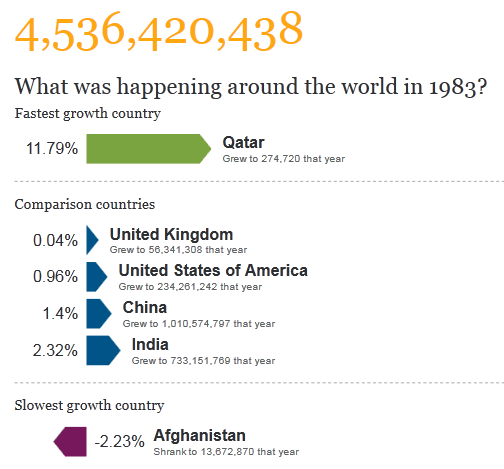
How big was the world's population when you were born?
As the world population fast approaches 7 billion, The Guardian has published this excellent resource where you can enter your date of birth to find out what the world's population was on that date, as well as information on how different countries were growing at that time.
Check it out here! This is what the world population was on my date of birth...

Check it out here! This is what the world population was on my date of birth...
Wednesday, 12 October 2011
Climate change in Africa
This is one of the compulsory case studies for Unit 1 Global Challenges. The following articles are particularly useful!
BBC News Climate change 'hitting Africa' 28th October 2006
Christian Aid The economic cost of climate change
The Independent Climate change will be catastrophe for Africa 16th May 2006
World Wildlife Fund Impact of Climate Change
The Guardian Climate change will devastate Africa 28th October 2009
Oxfam Horn of Africa drought: Climate change and future impacts on food security
BBC News Climate change 'will dry Africa' 29th November 2005
BBC News Climate change 'hitting Africa' 28th October 2006
Christian Aid The economic cost of climate change
The Independent Climate change will be catastrophe for Africa 16th May 2006
World Wildlife Fund Impact of Climate Change
The Guardian Climate change will devastate Africa 28th October 2009
Oxfam Horn of Africa drought: Climate change and future impacts on food security
BBC News Climate change 'will dry Africa' 29th November 2005
Sunday, 24 January 2010
Geography in the News: Haiti Earthquake lesson
The first of two lessons learning about the earthquake in Haiti. Note: The YouTube logo is hyperlinked to the videos!
Haiti Earthquake KS3 Lesson
View more presentations from JoBlack.
Sunday, 17 January 2010
Choosing GCSE Geography
The time to decide your GCSE options is quickly approaching with the options evening on Thursday 21nd January! Check out the PowerPoint below to find out if Geography might be the right decision for you!
To find out more about GCSE Geography, speak to Mr Gurney or Miss Blackmore.
GCSE Geography Promotion
View SlideShare presentation or Upload your own.
To find out more about GCSE Geography, speak to Mr Gurney or Miss Blackmore.
Sunday, 6 September 2009
Case Study Template for A2 Unit 4 Tectonic Activity
Here is a copy of the case study template for you to download. Once you have gathered your research in relation to a tectonic event, sythesise it down to the main points using this document!
Remember the four areas:
1. Causes
2. Physical impact
3. Human impact
4. Response
Your colour coding system should be well established by now, and will help you to quickly identify the four key areas within your research.
Remember the four areas:
1. Causes
2. Physical impact
3. Human impact
4. Response
Your colour coding system should be well established by now, and will help you to quickly identify the four key areas within your research.
Thursday, 23 July 2009
Little Britain: If the UK was a village of 100 people...
If England, Wales, Scotland and Northern Ireland were condensed to a single community of 100 people, what would that community look like?
 The Daily Mail has trawled acres of spreadsheets and data-sets published by government and other statistical authorities to produce a snapshot of Britain in the 21st century. Here are just a few statistics:
- EACH person would generate 495kg of waste every year. The village would generate 163kg of waste every day, of which just 47kg would be put out for recycling.
- THE villagers would have 118 mobile phones among them (66 of which would be pay-as-you-go).
- TWENTY-ONE villagers would have watched Andy Murray beat Stanislas Wawrinka at Wimbledon this year; 32 people would have watched Susan Boyle lose Britain's Got Talent.
- THIRTY people would have a Facebook account.
- THERE would be a total of 74 voters, but only 26 of them would have gone to the polls at this year's European elections.
To see the rest of the statistics, click here.
Wednesday, 22 July 2009
Breathing Earth
www.breathingearth.net
I had forgotten about this great site until I saw it mentioned on Funky Geography. It is a simulated world map showing the CO2 emissions and birth and death rates by country happening in real time.
I had forgotten about this great site until I saw it mentioned on Funky Geography. It is a simulated world map showing the CO2 emissions and birth and death rates by country happening in real time.
New Zealand moves closer to Australia!
A massive earthquake last week has brought New Zealand closer to Australia, scientists say. The 7.8 magnitude quake in the Tasman Sea has expanded New Zealand's South Island westwards by about 30cm (12in). New Zealand frequently suffers earthquakes because it sits on the meeting point of the Australian and Pacific continental plates.
See the full BBC report here.
See the full BBC report here.
Sunday, 19 July 2009
650 million years in one minute!
A great find, ideal for the first lesson of the new GCSE starting in September 2009!
650 Million Years in 1 Min. and 20 Sec. - Watch more Funny Videos
650 Million Years in 1 Min. and 20 Sec. - Watch more Funny Videos
Saturday, 4 July 2009
Coastal Management at Sidmouth
A good local example...what forms of coastal management can you see??
Sidmouth seafront west in England
Sidmouth seafront west in England
Monday, 22 June 2009
Glacier melt changes Italian border
The border between Italy and Switzerland is being redrawn as glaciers along the frontier melt. The border was last changed in 1861 when Italy became a unified state, but this time the shift is being blamed on climate change.
Thursday, 28 May 2009
A2 Level: Issues Analysis (synoptic)
The following resource and websites are those already highlighted by Mr O'Callaghan of The Kingdown Geography Blog...
1. Tourism in the Cairngorms, Scotland (from SAC - Scottish Agricultural College).
The Cairngorms became Scotland's second National Park in September 2003. The area is also used for a number of tourism activities.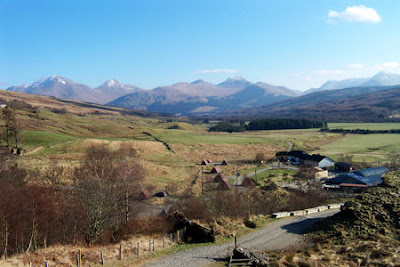 The Cairngorm funicular is a means of transport, pulled by cables over a track bed, allowing visitor access from the car park area up the mountain plateau. It was designed primarily for winter sports enthusiasts (skiers and snow-boarders) to replace the outdated chairlift system, but is in use all year round. In summer, however, visitors are not allowed to leave the restaurant viewing platform area, due to the potential damage their walking would inflict on the fragile mountain environment and local ecosystem. Much controversy surrounded the granting of the permission for the development to take place, with heated conflicts between conservationists and the developers.
2. The Cairngorms Campaign
The Cairngorms Campaign is a membership organisation, welcoming individuals and groups as members who support its aims of protection and appreciation of the area. The Cairngorms Campaign strives to prevent unsustainable, damaging developments and argues for better management of the Cairngorms area. It works with landowners, managers, local authorities, government and agencies to this end.
3. Building ban on second homes in the Cairngorms - Times Online
WEALTHY outsiders are to be banned from building new holiday homes in the Cairngorms National Park under plans aimed at stopping rural communities from becoming tourist “ghost towns”.
1. Tourism in the Cairngorms, Scotland (from SAC - Scottish Agricultural College).
The Cairngorms became Scotland's second National Park in September 2003. The area is also used for a number of tourism activities.
 The Cairngorm funicular is a means of transport, pulled by cables over a track bed, allowing visitor access from the car park area up the mountain plateau. It was designed primarily for winter sports enthusiasts (skiers and snow-boarders) to replace the outdated chairlift system, but is in use all year round. In summer, however, visitors are not allowed to leave the restaurant viewing platform area, due to the potential damage their walking would inflict on the fragile mountain environment and local ecosystem. Much controversy surrounded the granting of the permission for the development to take place, with heated conflicts between conservationists and the developers.
2. The Cairngorms Campaign
The Cairngorms Campaign is a membership organisation, welcoming individuals and groups as members who support its aims of protection and appreciation of the area. The Cairngorms Campaign strives to prevent unsustainable, damaging developments and argues for better management of the Cairngorms area. It works with landowners, managers, local authorities, government and agencies to this end.
3. Building ban on second homes in the Cairngorms - Times Online
WEALTHY outsiders are to be banned from building new holiday homes in the Cairngorms National Park under plans aimed at stopping rural communities from becoming tourist “ghost towns”.
The park wants to restrict the sale of new housing within its 1,467-square-mile boundaries to people who live, work or have family links in the area. It means that outsiders will no longer be allowed to buy or build new housing for use as second homes or as holiday homes for rent.
The Cairngorms is Britain’s largest national park, with a vast mountain wilderness at its heart. It encompasses large areas of the Highlands, Moray, Aberdeenshire and Angus and is home to 17,000 people and 25 per cent of Britain’s threatened species.
Its spectacular scenery is a magnet for tourists, but in property terms has resulted in an epidemic of wealthy second-homers, who now own one-in-five of all houses within the park. That figure rises to about half in some small villages such as Braemar. The knock-on effect has been a steep rise in property prices, up by as much as 13 per cent a year, placing even the most modest, semi-detached family home beyond the financial reach of locals.
Subscribe to:
Posts (Atom)