Showing posts with label year 13. Show all posts
Showing posts with label year 13. Show all posts
Monday, 26 December 2011

Saturday, 29 October 2011
Turkey earthquake
On Sunday 23rd October, a magnitude 7.2 earthquake hit eastern Turkey. The epicentre of the quake was near the city of Van and Ercis.

Useful links (particularly for Unit 4 A2 Geographers!)...
Turkey earthquake death toll passes 500 The Telegraph, 27th October 2011
Turkey earthquake: Teenage boy found after four days BBC News, 28th October 2011
Boy Pulled Uninjured From Turkey's Quake Wreckage NYTimes, 28th October 2011
Turkey Earthquake: building negligence amounts to murder The Guardian, 26th October 2011 (excellent evaluative article - useful for analysis!)
Turkey Earthquake: Government will accept foreign aid BBC News, 26th October 2011
Photographs from National GeographicTurkey earthquake: Death toll passes 430 BBC News, 25th October 2011
Earthquake Adds Even More Pressure to relations between Turks, Kurds Voice of America, 27th October 2011 (good for Unit 4 'values and attitudes' part of the mark scheme!)
Timeline: major earthquakes in Turkey Reuters, 27th October 2011
A Geoglogist's Eye View of Van Earthquake Scientific American, 27th October 2011 (good explanation of tectonics and causes)
New Insights into the October 2011 Van Earthquake Earthquake-Report (CEDIM), 25th October 2011
Turkey Quake casts spotlight on political fault lines Monsters & Critics, 27th October 2011
After quake, Turkey has proven it can get by on its own Haaretz.com, 29th October 2011
Turkey still not ready for next big one The National, 17th August 2009
The Next Big Quake? Foreign Policy, 21st January 2010
 Don't forget to check out the 'related articles' that feature in some of the links above. This will broaden your research, whilst still keeping it focused on the Turkey earthquake.
Monday, 24 October 2011
Mount Everest: Impacts of tourism

"The committee says it brought back 25 tonnes of rubbish from Everest last spring – including 12,000kg of paper and plastic and 11,250kg of human waste."
Useful sources for Edexcel A2 Unit 4 Consuming the Rural Landscape
The Mission to clean up Mount Everest The Guardian
Calls for long term Everest waste management plan - starting with toilets The Guardian
Sunday, 6 September 2009
Case Study Template for A2 Unit 4 Tectonic Activity
Here is a copy of the case study template for you to download. Once you have gathered your research in relation to a tectonic event, sythesise it down to the main points using this document!
Remember the four areas:
1. Causes
2. Physical impact
3. Human impact
4. Response
Your colour coding system should be well established by now, and will help you to quickly identify the four key areas within your research.
Remember the four areas:
1. Causes
2. Physical impact
3. Human impact
4. Response
Your colour coding system should be well established by now, and will help you to quickly identify the four key areas within your research.
Thursday, 28 May 2009
A2 Level: Issues Analysis (synoptic)
The following resource and websites are those already highlighted by Mr O'Callaghan of The Kingdown Geography Blog...
1. Tourism in the Cairngorms, Scotland (from SAC - Scottish Agricultural College).
The Cairngorms became Scotland's second National Park in September 2003. The area is also used for a number of tourism activities.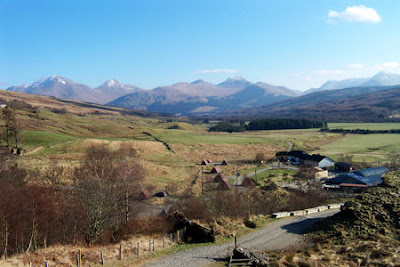 The Cairngorm funicular is a means of transport, pulled by cables over a track bed, allowing visitor access from the car park area up the mountain plateau. It was designed primarily for winter sports enthusiasts (skiers and snow-boarders) to replace the outdated chairlift system, but is in use all year round. In summer, however, visitors are not allowed to leave the restaurant viewing platform area, due to the potential damage their walking would inflict on the fragile mountain environment and local ecosystem. Much controversy surrounded the granting of the permission for the development to take place, with heated conflicts between conservationists and the developers.
2. The Cairngorms Campaign
The Cairngorms Campaign is a membership organisation, welcoming individuals and groups as members who support its aims of protection and appreciation of the area. The Cairngorms Campaign strives to prevent unsustainable, damaging developments and argues for better management of the Cairngorms area. It works with landowners, managers, local authorities, government and agencies to this end.
3. Building ban on second homes in the Cairngorms - Times Online
WEALTHY outsiders are to be banned from building new holiday homes in the Cairngorms National Park under plans aimed at stopping rural communities from becoming tourist “ghost towns”.
1. Tourism in the Cairngorms, Scotland (from SAC - Scottish Agricultural College).
The Cairngorms became Scotland's second National Park in September 2003. The area is also used for a number of tourism activities.
 The Cairngorm funicular is a means of transport, pulled by cables over a track bed, allowing visitor access from the car park area up the mountain plateau. It was designed primarily for winter sports enthusiasts (skiers and snow-boarders) to replace the outdated chairlift system, but is in use all year round. In summer, however, visitors are not allowed to leave the restaurant viewing platform area, due to the potential damage their walking would inflict on the fragile mountain environment and local ecosystem. Much controversy surrounded the granting of the permission for the development to take place, with heated conflicts between conservationists and the developers.
2. The Cairngorms Campaign
The Cairngorms Campaign is a membership organisation, welcoming individuals and groups as members who support its aims of protection and appreciation of the area. The Cairngorms Campaign strives to prevent unsustainable, damaging developments and argues for better management of the Cairngorms area. It works with landowners, managers, local authorities, government and agencies to this end.
3. Building ban on second homes in the Cairngorms - Times Online
WEALTHY outsiders are to be banned from building new holiday homes in the Cairngorms National Park under plans aimed at stopping rural communities from becoming tourist “ghost towns”.
The park wants to restrict the sale of new housing within its 1,467-square-mile boundaries to people who live, work or have family links in the area. It means that outsiders will no longer be allowed to buy or build new housing for use as second homes or as holiday homes for rent.
The Cairngorms is Britain’s largest national park, with a vast mountain wilderness at its heart. It encompasses large areas of the Highlands, Moray, Aberdeenshire and Angus and is home to 17,000 people and 25 per cent of Britain’s threatened species.
Its spectacular scenery is a magnet for tourists, but in property terms has resulted in an epidemic of wealthy second-homers, who now own one-in-five of all houses within the park. That figure rises to about half in some small villages such as Braemar. The knock-on effect has been a steep rise in property prices, up by as much as 13 per cent a year, placing even the most modest, semi-detached family home beyond the financial reach of locals.
Monday, 6 April 2009
Earthquake in Italy
 At least 27 people have been killed in a powerful earthquake that struck central Italy.
Five children are said to be among the dead and at least 30 people remain unaccounted for as a massive search for the trapped is under way.
The 6.3-magnitude quake struck in the early hours close to the medieval city of L'Aquila, 95km (60 miles) from Rome.
A civil protection official told the BBC that 3,000 to 10,000 buildings in the city may have been damaged.
To see the rest of the BBC report, click here.
Early report from CNN...
And from the BBC...
Saturday, 24 January 2009
Good Luck Year 11 and 13!
Monday is a big exam day for our great geographers! Wishing you all luck...

Year 11
Don't forget that the DME PowerPoint was posted on here a little while ago if you need it. Think sustainable or unsustainable!!!
Year 13
When discussing the effectiveness of hazard management, remember that their success depends on a number of factors...

Year 11
Don't forget that the DME PowerPoint was posted on here a little while ago if you need it. Think sustainable or unsustainable!!!
Year 13
When discussing the effectiveness of hazard management, remember that their success depends on a number of factors...
- Type of hazard - eg hurricane, earthquake, tsunami, flooding, tornado
- Frequency - how often the hazard happens
- Magnitude - the size of the hazard event
- Spatial/areal reliability - how reliable the management is over a particular space and area
- Speed of Onset - how quickly the hazard starts e.g. earthquakes have a quick speed of onset whereas volcanic eruptions are slower
- Technology available
- Education - is the population aware of what to do in the event of a hazard?
- Preparedness - is the region and its population prepared for the event?
- Economic resources - MEDC? LEDC?
- History - have they learnt any lessons from previous events?
If you need to ask any questions about either exams, add them to the comments at the end of this post and I'll answer them!!!
Monday, 29 December 2008
January retakes for Year 13
Here's some examples of the 10 mark case study questions that you can expect in your retakes in January...
Rivers/Coasts
- With reference to named examples, examine the impacts of river flooding on people's daily lives.
- With reference to one or more named examples, explain the benefits of environmentally sensitive river management.
- A number of hard engineering methods have traditionally been used to combat coastal erosion. Briefly describe two of these methods and for a named location explain why each was chosen.
- With reference to more than one country, examine the factors that influence government coastal management policies.
- For a located coastal ecosystem, explain how a study of the vegetation pattern can illustrate the process of succession.
- For a named stretch of coastline, examine to what extent sub-aerial processes have affected the coastal features.
- With references to named examples, examine the consequences of human activities on river environments with respect to one of the following: (a) urbanisation, (b) dams and reservoir construction, (c) water quality.
- With reference to one or more named examples, examine the relationships between the hydrological cycle and one of the following: (a) soil moisture budgets, (b) local storm events, (c) river regimes
Rural/Urban
- With reference to specific examples, examine how urban environments can be made more sustainable.
- Using specific exmamples, examine the conflicts arising from developments in the rural-urban fringe.
- Choose two contrasting rural environments. Examine the reason why the vary in character.
- Referring to named examples, examine the success of attempts to revive city centres.
- Referring to examples, explain how conflicts may arise between different groups when rural villages undergo rapid change.
- With reference to specific examples, examine the ways in which rural environments are being modified by one of the following: (a) changing farming practices, (b) the development of resources in the countryside, (c) tourism
- With reference to any named urban areas, examine the ways in which decision makers are attempting to manage one of the following: (a) traffic flows, (b) ethnic and/or religious segregation, (c) water and waste pollution, (d) provision of affordable housing.
Saturday, 20 December 2008
Managing Change in Human Environments retake
For those of you in year 13 retaking this unit, here are the two revision packages I made a couple of years ago to go with the human exam. The key to success in this exam is knowing your case studies as that constitutes 30/90 marks. I will add some examples of the case study questions to this post once I have found them! We will go through past exam papers in their entirety as soon as we return to school, but the most important thing will be learning the case studies and being able to apply them to the 10 mark extended answer exam questions.
Rural Environments Revision Package
Urban Environments Revision Package
Rural Environments Revision Package
Urban Environments Revision Package
Thursday, 18 December 2008
Year 13 coursework estimates
Please remember that these are estimates only. I am not an A Level examiner so have only gauged where each essay is, using the mark scheme!
The total raw marks available for Unit 5 is 120. The grades are awarded as follows: A 94, B 87, C 80, D 73, E 66. As there are two elements to this unit (coursework and exam), I have halved the marks to get the boundaries for the coursework. This will also give you an indication of what you need to get on the hazards exam to fulfil your expected grade.
Estimated Coursework results
Jonny 41/60 (Grade C)
Breakdown of marks: I=9, R=10, U=8, C=7, Q=7
Elliot 50/60 (Grade A)
Breakdown of marks: I=9, R=12, U=13, C=8, Q=8
Alex 42/60 (Grade C)
Breakdown of marks: I=8, R=11, U=11, C=6, Q=6 (you had several spelling errors still remaining and a lack of ongoing evaluation which sadly limited your marks in the conclusion and quality of writing)
Daisy 44/60 (Grade B)
Breakdown of marks: I=7, R=12, U=12, C-6, Q=7
Beth 47/60 (Grade A)
Breakdown of marks: I=8, R=12, U=13, C=6, Q=8
This is a massive relief, bearing in mind how much of the coursework had been written up until about 3 weeks ago!!! As you are aware, the hazards work was put on hold whilst we tackled the coursework. It is now time to refocus on your hazards research. I will be compiling a revision package as I always have done, but this needs to be matched equally by your preparation. It would be such a shame to bring down your coursework marks with a poor exam performance.
Thank you for your focused efforts over the last few weeks and well done on these great results!
Happy Christmas.
The total raw marks available for Unit 5 is 120. The grades are awarded as follows: A 94, B 87, C 80, D 73, E 66. As there are two elements to this unit (coursework and exam), I have halved the marks to get the boundaries for the coursework. This will also give you an indication of what you need to get on the hazards exam to fulfil your expected grade.
Estimated Coursework results
Jonny 41/60 (Grade C)
Breakdown of marks: I=9, R=10, U=8, C=7, Q=7
Elliot 50/60 (Grade A)
Breakdown of marks: I=9, R=12, U=13, C=8, Q=8
Alex 42/60 (Grade C)
Breakdown of marks: I=8, R=11, U=11, C=6, Q=6 (you had several spelling errors still remaining and a lack of ongoing evaluation which sadly limited your marks in the conclusion and quality of writing)
Daisy 44/60 (Grade B)
Breakdown of marks: I=7, R=12, U=12, C-6, Q=7
Beth 47/60 (Grade A)
Breakdown of marks: I=8, R=12, U=13, C=6, Q=8
This is a massive relief, bearing in mind how much of the coursework had been written up until about 3 weeks ago!!! As you are aware, the hazards work was put on hold whilst we tackled the coursework. It is now time to refocus on your hazards research. I will be compiling a revision package as I always have done, but this needs to be matched equally by your preparation. It would be such a shame to bring down your coursework marks with a poor exam performance.
Thank you for your focused efforts over the last few weeks and well done on these great results!
Happy Christmas.
Wednesday, 10 December 2008
Stop Disasters Game
This simulation is based on the idea of Sim City, but instead you have to manage a region prior to a natural hazard. You get a certain amount of time to prepare for the hazard before it hits. Then when disaster strikes you can see how effective your hazard management has been! Click on the image to take you to the game...

Mr Gurney and myself used this with classes ranging from year 10 to year 12 on Thursday and it went down a storm. It is clear we are in the presence of the hazard managers of the future! If you haven't tried it yet...have a go!
Tuesday, 9 December 2008
Year 13 Hazards exam in January
To your delight, you have 'Global trends in hazards and hazard management' as your generalisation to be examined in January. To kick off this post, here's a list of possible essay titles. Remember what I said, all questions are a variation of the generalisation, so they should not be a complete surprise!
Possible titles...
Possible titles...
- Critically evaluate the view that natural hazards appear to be occurring with increasing frequency
- To what extent can hazard prediction reduce the effects of hazards?
- Evaluate the future issues associated with living with natural hazards.
- Using a range of natural hazards comment on our future ability to predict and reduce their effects
- How effective is hazard prediction in reducing hazard impact?
- Comment on the assertion that the future of hazard management will rely on reducing their effects rather than their causes.
- Critically assess the statement that natural hazards are occurring more frequently.
- For a range of hazards outline prediction methods currently used and assess their effectiveness
- What are the issues surrounding the use of prediction as a "solution" for hazard management?
- To what extent can technology improve hazard prediction? Illustrate your answer with reference to at least three types of hazard.
- Discuss the view that it is not possible to prevent hazards but only to lessen their impacts.
- With reference to two contrasting types of hazards, examine the extent to which prediction can reduce the impacts.
- With reference to a range of prediction schemes evaluate their success.
As with your coursework reports, I shall keep adding relevant information to this post to support your independent research. Keep checking it for updates!
Wednesday, 26 November 2008
Year 13 Coursework Report advice
I will keep adding ideas, links and resources to this post to help you with your coursework report. There is an excellent guide to the report writing, which includes a model coursework report that achieved 55/60, which you can collect from my room. This post will be divided into sections according to the question.
For all of you, here is a site from another school with advice on the coursework report. Although it is from a different year so the questions are different, the advice remains the same.
1. To what extent is an unfair world trading system the root cause of the widening development gap between very rich and very poor countries? (Alex)
Here's a useful clip from BBC Learning Zone connected to trade patterns for rich and poor countries. Refering to various sources will give you a greater range of evidence.
For all of you, check if there are any clips relevant to your reports here.
Don McKinnon: Trade is a potent tool in combating global poverty The Independent
Rich nations 'renege on pledge to reform trade and help poor' The Independent
Leading article: Fair trade is growing – and working The Independent
Hamish McRae: Free trade is not just about goods. It is also about money, services - and people The Independent
World Trade: Facts and Figures The Independent
Great article from Voice of America news - The Global Rich and Poor Gap Widens
Detailed article from infochange Consumption on a global scale: The gap widens
Africa's natural resources are a potential gold mine The Independent
2. Aid which supports grassroots development is usually the best way to improve the quality of life for deprived groups. Evaluate this statement using examples from contrasting locations. (Beth and Daisy)
A fantastic case study of a grassroots project in which plastic bags scavenged from rubbish tips in Delhi, India, are made into fashionable bags sold in London boutiques!
From bags to riches: the recycling project which starts in India's rubbish tips The Independent
If you do a search on the World Bank website for 'grassroots development', several articles appear about developments in Papua New Guinea.
3. To what extent is the North-South divide (the Brandt line) still relevant when analysing disparities at a global scale? (Jon and Elliot)
China 'can be engine of growth' BBC News
This report from the World Socialist Website discusses global inequality in wealth, with a short mention of internal disparity in the USA - Report documents extreme levels of global wealth inequality
Don't forget all of you, you can add any questions you might have regarding your coursework report using the comments option at the end of this post!
For all of you, here is a site from another school with advice on the coursework report. Although it is from a different year so the questions are different, the advice remains the same.
1. To what extent is an unfair world trading system the root cause of the widening development gap between very rich and very poor countries? (Alex)
Here's a useful clip from BBC Learning Zone connected to trade patterns for rich and poor countries. Refering to various sources will give you a greater range of evidence.
For all of you, check if there are any clips relevant to your reports here.
Don McKinnon: Trade is a potent tool in combating global poverty The Independent
Rich nations 'renege on pledge to reform trade and help poor' The Independent
Leading article: Fair trade is growing – and working The Independent
Hamish McRae: Free trade is not just about goods. It is also about money, services - and people The Independent
World Trade: Facts and Figures The Independent
Great article from Voice of America news - The Global Rich and Poor Gap Widens
Detailed article from infochange Consumption on a global scale: The gap widens
Africa's natural resources are a potential gold mine The Independent
2. Aid which supports grassroots development is usually the best way to improve the quality of life for deprived groups. Evaluate this statement using examples from contrasting locations. (Beth and Daisy)
A fantastic case study of a grassroots project in which plastic bags scavenged from rubbish tips in Delhi, India, are made into fashionable bags sold in London boutiques!
From bags to riches: the recycling project which starts in India's rubbish tips The Independent
If you do a search on the World Bank website for 'grassroots development', several articles appear about developments in Papua New Guinea.
3. To what extent is the North-South divide (the Brandt line) still relevant when analysing disparities at a global scale? (Jon and Elliot)
China 'can be engine of growth' BBC News
This report from the World Socialist Website discusses global inequality in wealth, with a short mention of internal disparity in the USA - Report documents extreme levels of global wealth inequality
Don't forget all of you, you can add any questions you might have regarding your coursework report using the comments option at the end of this post!
Thursday, 30 October 2008
Why could Miss Blackmore's dad not get to work today?
You all know I'm a fan of mysteries in Geography!
The town of Ottery St Mary, east Devon, was cut off this morning by torrential overnight storms which caused 6ft high drifts of hailstones! More than 3 inches of rain and hail fell between 6pm on Wednesday and 8am this morning. More than 100 people had to be evacuated from their homes. Cars were buried up to their roofs in hasilstones. It is thought that the situation became so severe because hailstones blocked drains and caused serious flooding as more rain fell.
 Click on the map above to see it in more detail!


To find out more, check out these articles...
October's weird weather continues as village is inundated by 6ft drifts of hailstones
'Freak' hail causes flood chaos (includes video)
Freak storm leaves Devon town like 'lunar landscape' under 2ft of hail (includes video)
Arborfield blog (look at the amazing pictures on this blog!)
The town of Ottery St Mary, east Devon, was cut off this morning by torrential overnight storms which caused 6ft high drifts of hailstones! More than 3 inches of rain and hail fell between 6pm on Wednesday and 8am this morning. More than 100 people had to be evacuated from their homes. Cars were buried up to their roofs in hasilstones. It is thought that the situation became so severe because hailstones blocked drains and caused serious flooding as more rain fell.
Click on the map above to see it in more detail!


To find out more, check out these articles...
October's weird weather continues as village is inundated by 6ft drifts of hailstones
'Freak' hail causes flood chaos (includes video)
Freak storm leaves Devon town like 'lunar landscape' under 2ft of hail (includes video)
Arborfield blog (look at the amazing pictures on this blog!)
Not forgetting the mystery question, my dad couldn't get to work today because he works in the town of Ottery St Mary, which was this morning under as much as 6ft of hailstones and floodwater!
Subscribe to:
Posts (Atom)